Share Leslie Donald Epstein's obituary with others.
Invite friends and family to read the obituary and add memories.
Stay updated
We'll notify you when service details or new memories are added.
You're now following this obituary
We'll email you when there are updates.
Select your format and elements to print

IN LOVING MEMORY OF Leslie Donald Epstein
Leslie Donald
Epstein
May 4, 1938 — May 18, 2025
Brookline
Leslie Donald Epstein's Obituary
EPSTEIN, Professor Leslie Donald. Of Brookline passed away on May 18, 2025. Loving husband of Ilene and devoted father of Paul, Theo and Anya. In addition to his wife and children, he leaves a brother Ricky and his six grandchildren.
The family will sit Shiva in the family's Brookline home and will announce a celebration of Professor Epstein's life and work. Please visit the funeral home website for updated details for location and time of the life celebration.
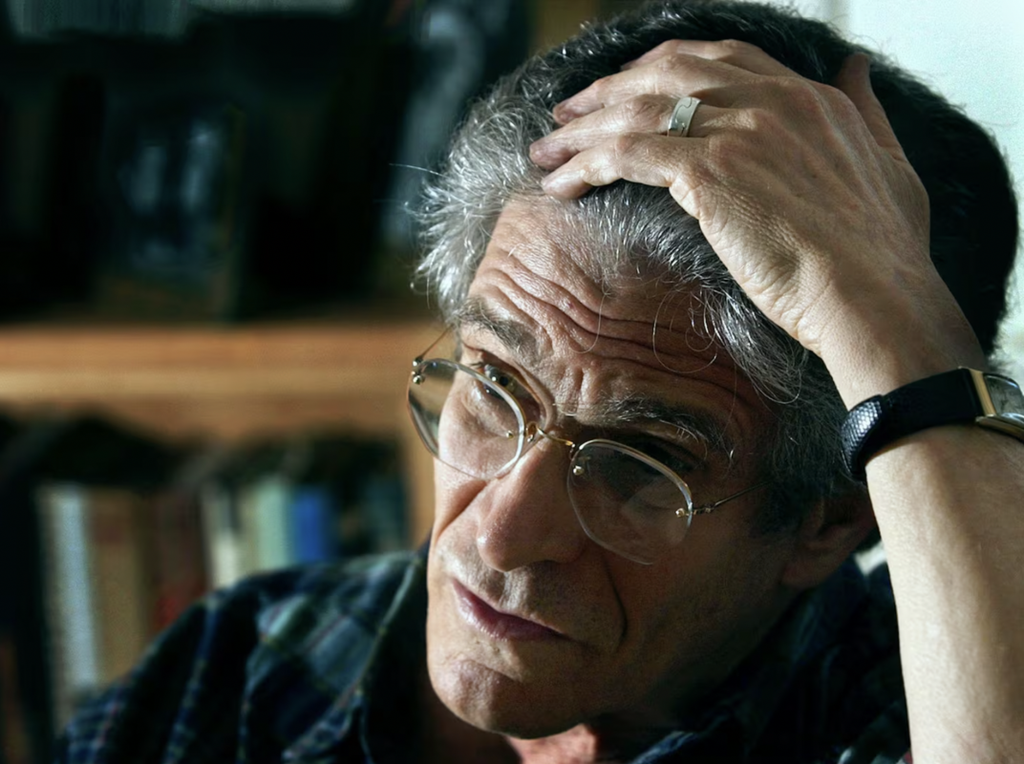
Reprinted with permission from the Boston Globe May 20, 2025; photo credit CHITOSE SUZUKI/The Boston Globe -
Leslie Epstein, author and creative writing professor whose novels drew from his family's storied legacy, dies at 87.
BU teacher was father of Fenway Sports Group's Theo Epstein
By Bryan Marquard Globe Staff,Updated May 19, 2025, 5:03 p.m.
The deaths just days apart of Leslie Epstein's mother and beloved uncle nearly a quarter century ago prompted him to reach deeper into sometimes painful memories and confront life's fragility while writing what became his most personal novel.
"Not only her mortality," he told The Boston Globe, "but that of her whole generation, and of my own mortality."
Published in 2003, "San Remo Drive: A Novel from Memory" borrowed details from his childhood among Hollywood royalty. His father and uncle, the twins Philip and Julius Epstein, were Academy Award-winning cowriters of the 1942 film "Casablanca." As a boy, Professor Epstein trick-or-treated at mansions of movie star neighbors such as Gregory Peck, and his novel named for the Los Angeles street where he grew up became a turning point in his writing.
"All my creative life has been a slow return to the past," he told The New York Times in 2003.
Professor Epstein, who taught for decades at Boston University, mentoring prize-winning authors while directing the creative writing program, died Sunday of complications from a stroke he suffered while hospitalized for heart surgery. He was 87 and had lived in Brookline since the late 1970s.
"San Remo Drive" was "a haunting and deeply affecting book" and was "wonderfully resonant," Times critic Michiko Kakutani wrote in 2003.
Beginning in the mid-1970s, Professor Epstein published a dozen works of fiction, along with reviews and essays in the Globe, the Times, and many other publications.
His teaching career, meanwhile, was often the more prominent role to many who knew him.
"He always inspired a kind of idealism and integrity with literature," said Ha Jin, an award-winning fiction writer and poet who studied at BU with Professor Epstein and now directs the university's creative writing program.
Professor Epstein had a rare gift for spotting a story's flaws and guiding writers he mentored through "that mystery of taking what you had put together and making it stand on its own two feet," said Jhumpa Lahiri, a Pulitzer Prize-winning writer who had studied with him at BU.
"He could diagnose a weakness in a way that, honestly, felt miraculous, and I don't use that word lightly," she said. "That's the kind of lesson that lasts you for your whole life. Because of that, he will remain my teacher for as long as I live and as long as I write."
Speaking with a website that features former Rhodes scholars, Professor Epstein said that when asked, he says "I teach. I'm a college professor. I almost never say writer. When pressed, like on the IRS forms, I'll put 'prof/writer,' but when people ask me, I just say I teach at BU."
Little in Professor Epstein's life was "just" anything, however.
"There was a creative streak that ran through the family," said his daughter, Anya Epstein of Brooklyn, N.Y., a TV producer and writer whose series credits include "Homicide: Life on the Street" and "In Treatment."
Professor Epstein also was the father of Theo Epstein, a part owner and senior adviser of the Fenway Sports Group who more than 20 years ago became the youngest general manager in Major League Baseball history and the youngest to win a World Series when Boston snapped its 86-year championship drought in 2004.
Theo's twin, Paul, is well-known in Brookline as a longtime social worker at the high school.
"Razor sharp wit — those three words seem to capture a key component of his character — that and towering intellect," Paul said of his father.
Professor Epstein augmented his writing critiques by playing Bach concerto recordings in his classroom, assigning students to watch Ingmar Bergman movies on weekends, and suggesting museum visits to strengthen their artistic foundations.
"He had a certain charisma," said his wife, Ilene, who formerly co-owned the Studio, a women's clothing store in Brookline, for about four decades. "If he came into your life, you remembered him."
As a spouse, father, teacher, or friend, "he turned people toward another direction that allowed them to fulfill their dreams," she said.
Leslie Donald Epstein was born in Los Angeles on May 4, 1938, and spent part of his youth in the city's Pacific Palisades neighborhood.
He was 13 when his father, Philip, died.
Leslie, the older of two brothers, had a more distant relationship with his mother, Lillian Targin Epstein.
"She was too close and too distant at the same time," Professor Epstein told the Globe. For "that daily nurturing there were maids and others." After his father died, his mother got a master's in social work and began working with children. "I never got over the irony of that," he said.
Initially aspiring to write plays, Professor Epstein graduated from Yale University with bachelor's and doctoral degrees, went to Oxford University in England as a Rhodes scholar, and received a master's from the University of California at Los Angeles.
He began teaching in New York at Queens College, where he met Ilene Gradman, whom he married in 1969. Her twin sister was in a class he taught, and insisted that Ilene meet the handsome teacher.
"He was, in fact, adorable," said Ilene, who was struck by his mix of traits, such as being shy in person, but assertive and brilliant in the classroom.
When he kissed her good night after walking her home on their first date, "I felt his heart beating," she said.
In addition to Ilene and their children, Professor Epstein leaves his brother, Ricky of Carpinteria, Calif., and six grandchildren.
The family will sit Shiva in the family's Brookline home and will announce a celebration of Professor Epstein's life and work.
Along with delighting his grandchildren with exaggerated funny faces that were tailor-made for memorable photos, Professor Epstein was a calm and stabilizing presence for them, as he had been with his three children, Theo said.
"He made us all laugh constantly, and always with a phrase that you could never concoct or would never suspect," Anya said. "He had a tremendous cackling laugh and was a practical joker, which he inherited from his father and uncle."
As his children and grandchildren reached adolescence, Professor Epstein gave each a copy of "The Grapes of Wrath" to read.
"He had a moral compass and a deep sense of right and wrong," Theo said. "He hated bullies and always rooted for the underdog — in life, in politics, and in sports."
When Theo became general manager of the Red Sox, his father made one suggestion: "Be bold in doing this job," advice his son took to heart when deciding to trade away longtime fan favorite Nomar Garciaparra as a necessary step toward winning the 2004 championship.
Bold in doing his own job, too, Professor Epstein wrote books including "King of the Jews." His best-known work, it drew praise and criticism for introducing an element largely absent from Holocaust literature.
"Writing in the manner of old Jewish storytellers, Epstein dares to be funny: It is the mordant humor that has always been the visible rage of those who are forbidden to show their rage," Washington Post reviewer Michael Kernan wrote.
The 1979 novel, set in a World War II Polish ghetto, was "an astonishing accomplishment," Kernan wrote.
Professor Epstein adapted the novel into a play that was staged in Boston in 2007.
"He was a terrific observer of the world and his mind was always churning," said Theo, who added that those closest to his father sometimes noticed a hint of a smile as a thought formed. "He was delighting himself and couldn't wait to share it, and then he'd find just the right words that either cracked up the room or made people think in a new way, and quite often elevated their world."
Generally in good health when he scheduled this month's surgery, Professor Epstein had taught the spring semester at BU.
In January, he published an opinion essay in the Globe, lamenting the nation's political turn and "the appeal of fascism" that ripples from continent to content, from one era to the next.
"He was probably writing more in the last year than he ever did in the years before," Anya said. "Short stories, novels, letters to the editor — right up to the day before he died."
Bryan Marquard can be reached at bryan.marquard@globe.com
Leslie Donald Epstein's Guestbook
Visits: 63
This site is protected by reCAPTCHA and the
Google Privacy Policy and Terms of Service apply.
Service map data © OpenStreetMap contributors