Share John D. Holland's obituary with others.
Invite friends and family to read the obituary and add memories.
Stay updated
We'll notify you when service details or new memories are added.
You're now following this obituary
We'll email you when there are updates.
Select your format and elements to print

IN LOVING MEMORY OF John D. Holland
John D.
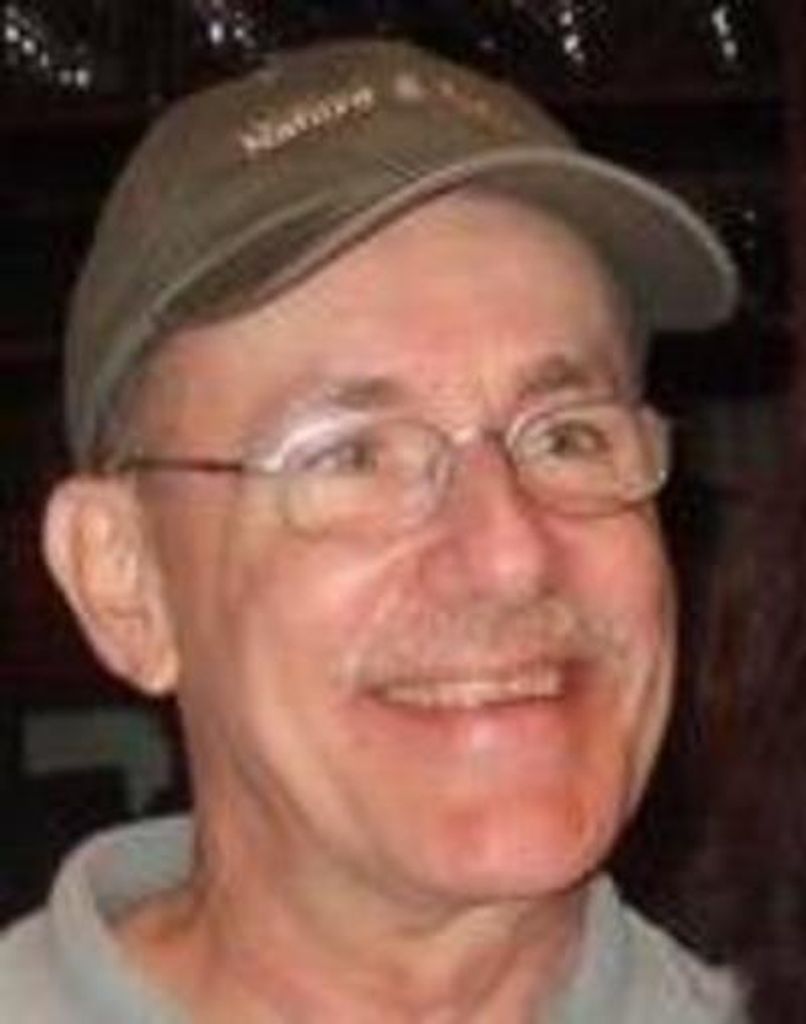
Holland
Dec 21, 1944 — May 25, 2024
Lexington
John D. Holland's Obituary
John Holland, pioneering American composer, dies at 79
John D. Holland b December 21, 1944, d May 25, 2024 was Professor Emeritus in the Studio for Interrelated Media at Massachusetts College of Art and Design in Boston. He headed the Electronic Music Studio and taught music and performance classes before he retired from teaching in 2009. He established the American Soundgroup in 1974 and was later in permanent residence at the Pozen Center for Interrelated Media, Boston.
"Music models physical events all around us, ranging from human thoughts and feelings to atomic interactions and astronomical happenings," wrote Holland. "Music simulates natural rhythms, speeds, and durations of all kinds. It models beginnings and endings." Founded on this set of beliefs, Mr. Holland pioneered several novel types of musical forms including "Musico-Genomic Structure," likening the 12 tones of the chromatic scale to the four DNA chemical base pairs, and "Integer Music" which employs integers to represent the number of sounds for the musician to play. The integers are derived from text in the score (A=1, Z=26), and are read and interpreted freely by the player. Pitches are selected by the player. Holland wrote that with this musical structure, musicians are "liberated from their boundaries, a pantonic and democratic distribution of tones…generated to represent the shape of human experience…intended to provoke the listener to imagine events in the world as discrete patterns, unique and independent, yet occurring globally."
He published dozens of musical scores for solo instruments, orchestra, chamber ensembles, and voice, as well as several operas including The Transcendentalists, Benjamin Franklin, and a web opera based on Mark Twain's The Diaries of Adam and Eve. He often paired traditional instrumentation and acoustic notation with electronic music, speaking voice, and performative arts. Mr. Holland's music has been performed largely in Boston and New York including Mobius, Boston, Boston Center for the Arts, New England Conservatory's Jordan Hall, the Harvard Smithsonian Observatory, MIT Media Lab, Yamaha Piano Studio, Bard College, Tufts University, and Vassar College among others.
Mr. Holland also produced over a dozen albums, including Robotic Dances for Computer Controlled Synthesizers ("a musical representation of the history of humankind's search for self-knowledge") and Natural Phenomena for Digital Piano which was labeled "one of the notable CD's of 2005" by John Schaefer, host of New Sounds on WNYC Radio NY.
Mr. Holland was born into a family of musicians in Toledo, Ohio. Though he relocated to Massachusetts in his 20s where he would remain for the rest of his life, he carried a deep nostalgia for his Ohio roots. He manifested this through a Toledo Mudhens cap, a dogged loyalty to the Cleveland Guardians and the Ohio State Buckeyes, the intermittent arrival of Tony Packo's hot dog sauce through the mail, a well-worn recitation of the hallowed artists to emerge from Ohio soil, and the arrangement of the American hymn "Banks of the Ohio" for violin and piano in his later life. Mr. Holland studied piano as a child and began composing music in adolescence. Between 1952 and 1957, he was a soprano soloist in the men and boys choir at Trinity Episcopal Church in downtown Toledo. He soloed on Christmas Eve on a local television broadcast, was featured with a full-page newspaper spread in the April 6, 1957 edition of the Toledo Blade, and was recorded with his brother, David Holland, by CBS records. He often spoke of his experience with the choir as one of the richest and happiest times of his young life. His joy in this experience foretold what would come to be a central theme of his later work—the pursuit of "truth without compromise," to which both "art and science aspire."
Mr. Holland was ambivalent about traditional music education, much to his father's chagrin, and remained largely self-taught throughout his career. In his early years, he worked odd jobs affording him the flexibility to spend the remainder of his waking hours steeped in scores and records, studying those who had come before him. He cited Charles Ives, John Cage, and Nature as the largest influences on his work. Mr. Holland was particularly fond of a quote by Ludwig Van Beethoven who advised, "Don't just practice your art, but force your way into its secrets." Mr. Holland did so relentlessly.
Compelled to understand how sound becomes music, he studied at the science libraries of MIT and Harvard, ultimately authoring Trilogy: The Path of Sound, which describes sound patterns from their source, through the air, into the ear, and to the brain "filling a void for musicians, artists, and others who wish to confront subjects that are deeply connected to music, its understanding and performance." In 1997 Holland produced the first comprehensive full color poster-size Acoustic Wave Spectrum. It was later presented at the MIT Media Lab and in 2007 producer and composer DJ Spooky attached it to his audio CD companion to Sound Unbound.
Despite the unconventional paths that they travel to pursue their craft, artists, Mr. Holland wrote, "are tolerated by society for their creative instinct, especially their urge to confront change…by asking questions. At the center of most successful artworks is a simple question, something the artist is attempting to understand or resolve." With this guiding principle, Mr. Holland co-founded Nature and Inquiry, an artists group, that met weekly to discuss ideas in art and science. The group presented work throughout the Boston area in the 1990s through the 2000s. He also designed and taught a class for three decades at MassArt that introduced artists to leading-edge ideas in science. In 2011, he co-authored Curious: An Introduction to Big Ideas in Nature, Science, and Art, a children's book, with his wife, Mary Briggs Holland.
Mr. Holland's curiosity knew no bounds, and he constantly sought to understand the complexities around him, whether it was the tides of the ocean, the coloring of a red-winged black bird, or the wrist articulation of a bow arm or a free throw. He came from a lineage of basketball talent, and he was no exception. Mr. Holland played full-court basketball into his early 70s. The rhythm and language of the game was as deeply ingrained in him as the structure of a string quartet. He was a finesse player who took pride in his jump-shot, his behind-the-back assist, and in the numerous victories he amassed over players decades his junior. In basketball, he also found life-long friends, including his long-time physician Dr. David Ives, whom Mr. Holland invited into his basketball league, and who cared for him throughout his illness, making home calls during his last days.
Mr. Holland talked often about the parallels between those sublime moments in both basketball and in chamber music when players meld together in a perfect harmony of symbiosis, bringing out the best in each other and themselves. Sitting in his den on a spring evening, he would watch a Celtics game with the announcers on mute while listening to a particular chamber piece that he insisted matched the tenor of the game perfectly. Later, he digitally modified and mixed classical works with sports radio broadcasts, inviting listeners to join in appreciating these connections he had experienced since childhood.
"A single piece of music may contain the local characteristics of its culture, as well as the general principles of the universe of which it is a part. In general, music contains the conscious and unconscious concerns and passions of its creator, or its interpreter, or both." Mr. Holland, a longtime Bostonian, made the following suggestions in a late text: 1. to replace the Henry Hadley memorial mounted on the back of the Hatch Shell on the Esplanade in Boston, with the name of Charles Ives; and 2. to organize a First Wednesday of the Month that is dedicated to fixed media and presented informally at Boston's Symphony Hall.
Mr. Holland is outlived in body, though not in spirit, by his wife Mary, brother David, sister Marla, daughter Erica, stepdaughter Amy, sons-in-law Alex and Jerome, and grandchildren Clara, Emma, Snow, and Brianna.
If he were here now, he would remind us that change is here to stay, that we must never stop adapting, and that the best of who we are is all around us, if only we would stop and listen.
The Holland family plans a Celebration of Mr. Holland's Life for September 14, 2024. In lieu of flowers, the family requests that donations be made in John's memory to Massachusetts College of Art and Design ( http://massart.edu/give ). Please select "In memory of John Holland" from the pull-down menu. All donations will be directed towards MassArt's Studio for Interrelated Media (SIM) Department.
John D. Holland's Guestbook
Visits: 8
This site is protected by reCAPTCHA and the
Google Privacy Policy and Terms of Service apply.
Service map data © OpenStreetMap contributors