Share Brit Jepson D'Arbeloff's obituary with others.
Invite friends and family to read the obituary and add memories.
Stay updated
We'll notify you when service details or new memories are added.
You're now following this obituary
We'll email you when there are updates.
Select your format and elements to print

IN LOVING MEMORY OF Brit Jepson D'Arbeloff
Brit Jepson
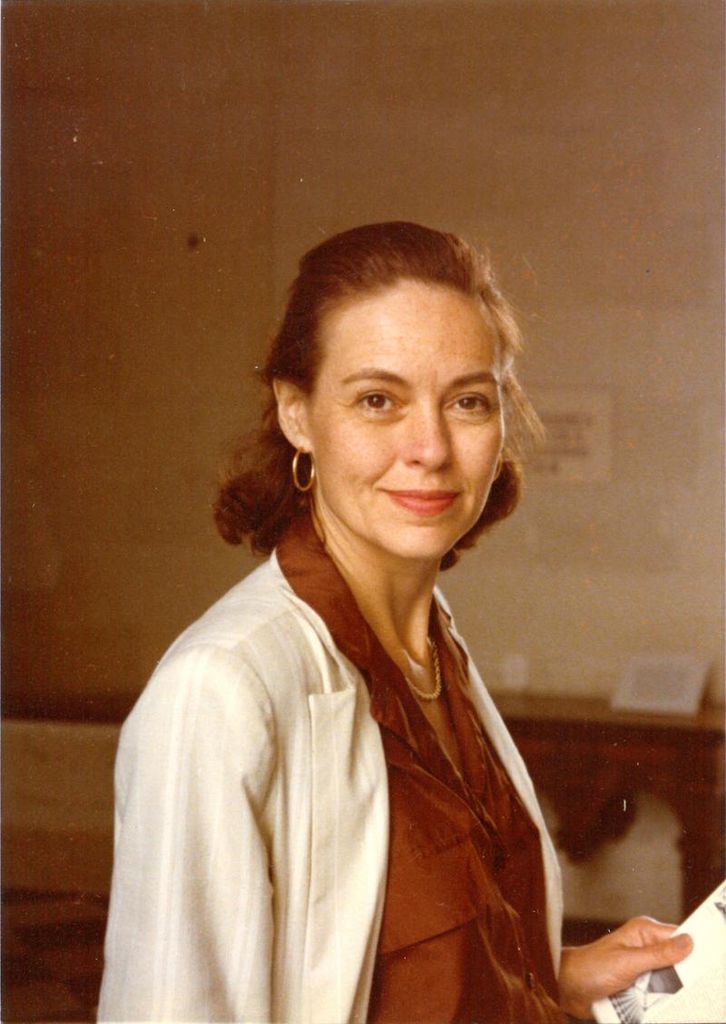
D'Arbeloff
Apr 23, 1935 — May 8, 2026
Brookline
Brit Jepson D'Arbeloff's Obituary
Brit Jepson d'Arbeloff died peacefully at her home in Brookline, Massachusetts on May 8, 2026, at the age of 91 surrounded by her loving family. A pioneering engineer, philanthropist, and devoted advocate for education, science, and the arts, she lived a life defined by intellect, creativity, resilience, and generosity. A trailblazer for women in engineering and a steadfast supporter of the Massachusetts Institute of Technology and Stanford University, she inspired generations through both her accomplishments and her character.
Born in Chicago, Illinois, on April 23, 1935, Brit Marie Jepson was the daughter of Swedish engineer and inventor Ivar Jepson, (whose work for the Sunbeam Corporation transformed American domestic life including his design for the iconic Mixmaster), and Lillian Borgman Jepson, who studied fashion design and worked as a bookkeeper.
In 1953, Brit entered Stanford University at a time when women in engineering were exceedingly rare. She became the first woman to graduate in mechanical engineering from Stanford, earning her degree in 1957 with the highest distinction and finishing first in her class. She was elected to Phi Beta Kappa and honored by Tau Beta Pi, the nation's oldest engineering honor society.
College also solidified Brit's enduring love of folk music and art. She taught herself guitar and performed throughout her life for friends and family. She also pursued sculpture, writing and other crafts throughout her life. Her children have fond memories of her pulling out her guitar to sing classic 1960s folk songs, like "Charlie on the MTA," or "Sloop John B."
After graduation, Brit worked at Cook Research Laboratories in Chicago on the Redstone Missile nose-cone recovery package before moving east to join Northern Research & Engineering Corporation in Kendall Square. While working full time, she pursued graduate studies at MIT, earning a Master of Science in Mechanical Engineering in 1961. Her research focused on heating and cooling systems for high-speed aircraft, moon launches, and space travel.
As one of the few women in her field, Brit often spoke candidly about the challenges she faced. When she went to job interviews it was common for her to be immediately turned away because the prospective employer had assumed "Brit" was a man.
In 1962, Brit married Alex d'Arbeloff, who was in the process of founding the Teradyne Corporation, and the couple settled on Beacon Hill. Later, they moved to Brookline and raised four children. Once her children were older, Brit re-entered the workforce, teaching herself to program in COBOL, and became a systems analyst specializing in manufacturing software. She worked for Minico, Teradyne, and Digital Equipment Corporation, finding programming "enormously satisfying" because it was the "closest thing to immediate gratification" that she ever experienced. "It either worked, or it didn't work, and you knew right away." In 1985, inspired by her lifelong love of fashion and style, Brit became part owner of the women's clothing store Charles Sumner, where Brit served as vice president and treasurer for five years.
Together, Brit and Alex developed a program of philanthropy via transformative gifts to the institutions they loved. They established the d'Arbeloff Fund for Excellence at MIT to enhance and transform undergraduate life and funded the d'Arbeloff Laboratory for Information Systems and Technology in the Department of Mechanical Engineering at MIT. At Stanford, they helped fund the founding of the d.School, paying tribute to Brit's father and her own life-long commitment to design.
After Alex's death in 2008, Brit continued her philanthropy, making numerous donations. Most notably funding research on the sex differences in health and disease at the Whitehead Institute for Biomedical Research, which eventually led to the creation of the Brit Jepson d'Arbeloff Center on Women's Health.
Beyond academia, Brit was the Board Chair of Rogerson Communities, the non-profit provider of housing, memory care, independent living, and adult day health solutions for older adults in Massachusetts. You could often find her observing art or listening to music at the Isabella Stuart Gardner Museum, where she was on the board for many years. In addition, Brit served on numerous other boards of organizations, notably the Museum of Science in Boston and Planned Parenthood of Massachusetts. She was a strong supporter of the arts, including the New England Conservatory, the Massachusetts College of Art and Design, the Coolidge Corner Theater, and the Boston Early Music Festival.
Brit's family and colleagues affectionately referred to her as "Queen d'Arb," a nod both to her confidence and to how she led the d'Arbeloff family. Above all, Brit d'Arbeloff will be remembered as a woman who refused to accept limitations, and who devoted her life to building a better world with her intellect, wit, warmth, and determination.
Brit leaves behind her four children, Kate, Eric and his husband Howard Cohen, Matt and his wife Claudia Lavin, and Alexandra and her husband Kurt Nangle; her seven grandchildren, Sam, Caleb, Lucas, Alejandro, Joshua, Sofia, and Elizabeth; as well as numerous nieces, nephews, whom she loved dearly. In lieu of flowers, the family asks that donations be made to either The Brit Jepson d'Arbeloff Center on Women's Health at the Whitehead Institute for Biomedical Research (donations can be made online at donations https://donations.wi.mit.edu/darbeloff or by mail to 455 Main Street, Cambridge, MA 02142), or to Rogerson Communities (donations can be made online at https://rogerson.org/give/ or by mail to: Rogerson Communities, 1 Florence Street, Boston, MA 02131).
Brit Jepson D'Arbeloff's Guestbook
Visits: 134
This site is protected by reCAPTCHA and the
Google Privacy Policy and Terms of Service apply.
Service map data © OpenStreetMap contributors